03 / Case study / 2026
Smart & Responsive Materials
Researching how materials that sense and react reshape product behaviour and user experience.
Overview
This research project examines the shift from passive materials to materials that change, respond and communicate. It asks how responsive behaviour affects the relationship between user and object, and what new responsibilities it creates for product designers.
01 / Research frame
Material is no longer only a surface. It can carry behaviour.
The paper explores a fundamental shift in product design: technology is moving from an external component into the material itself. Light, temperature, pressure and human presence can become inputs that visibly change an object's state.
The designer therefore shapes more than form and function. They define when a response happens, how quickly it unfolds and what the user is meant to understand from it.
02 / Material landscape
Different technologies create different kinds of dialogue.
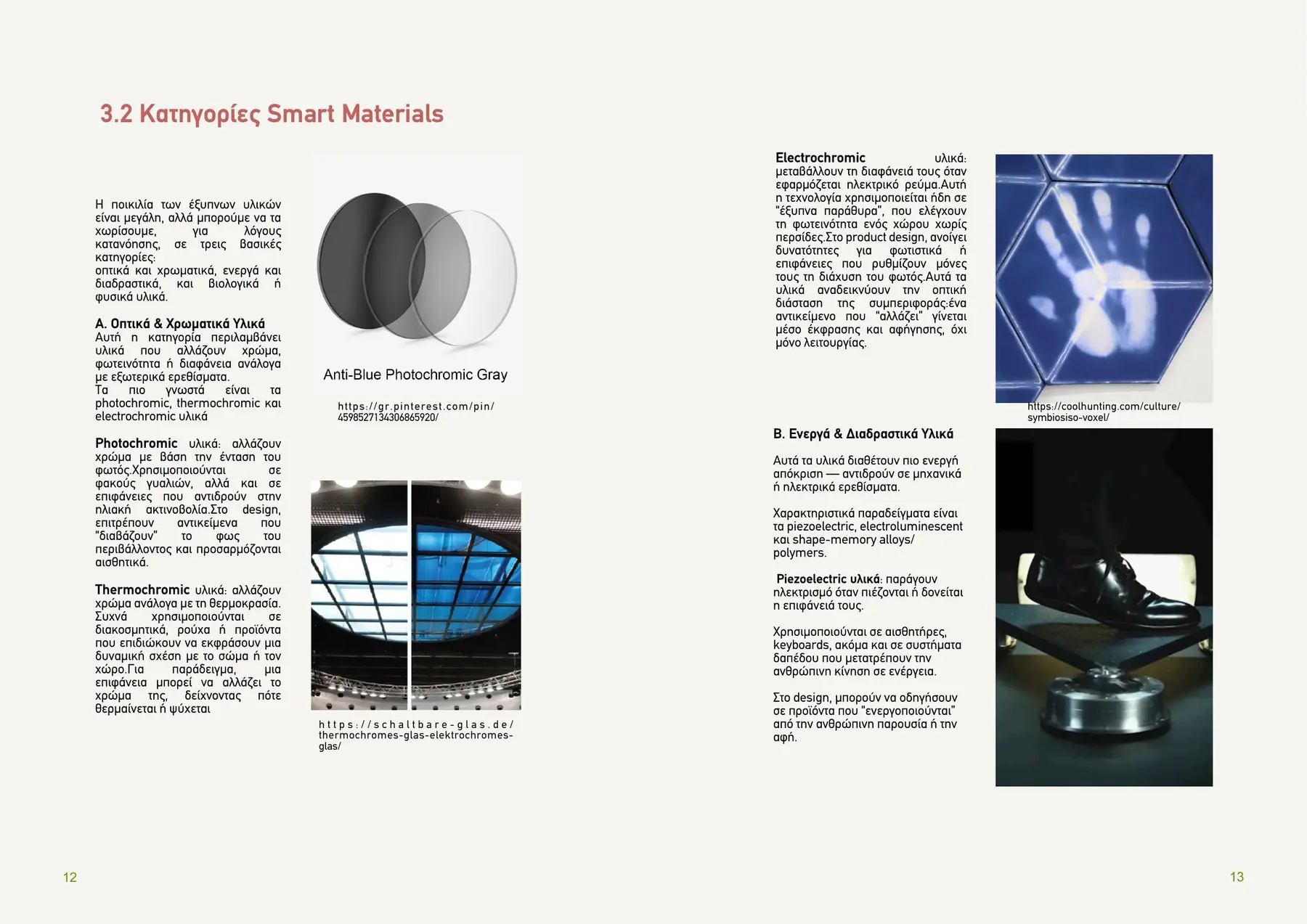
The study maps colour-changing, electrochromic, electroluminescent, piezoelectric and shape-memory materials alongside biological and hybrid systems.
Some responses are direct and legible, such as colour changing with heat. Others are more atmospheric, using motion or light to suggest that the object is aware of the surrounding environment.
03 / Case studies
Three projects reveal three very different forms of responsiveness.
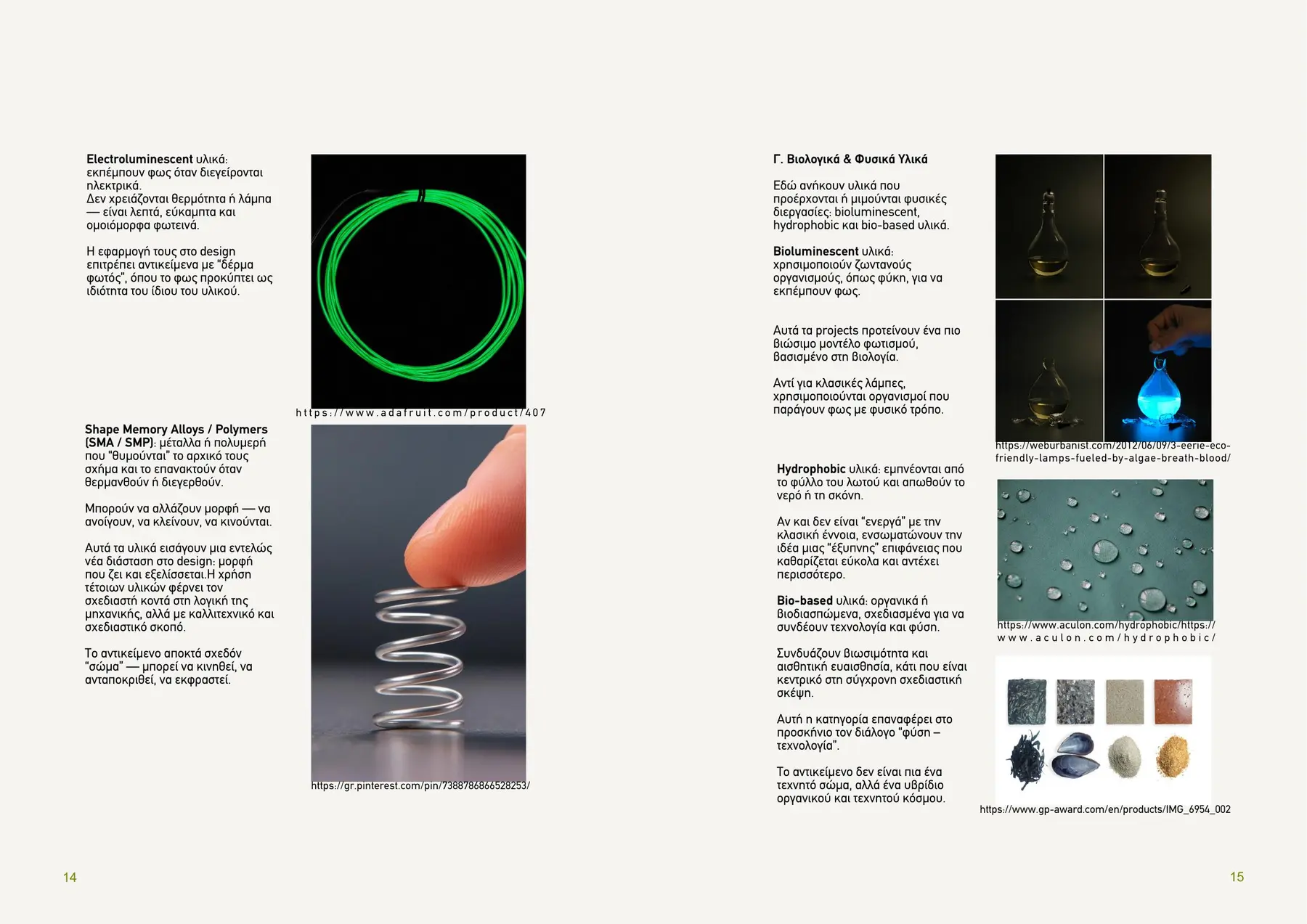
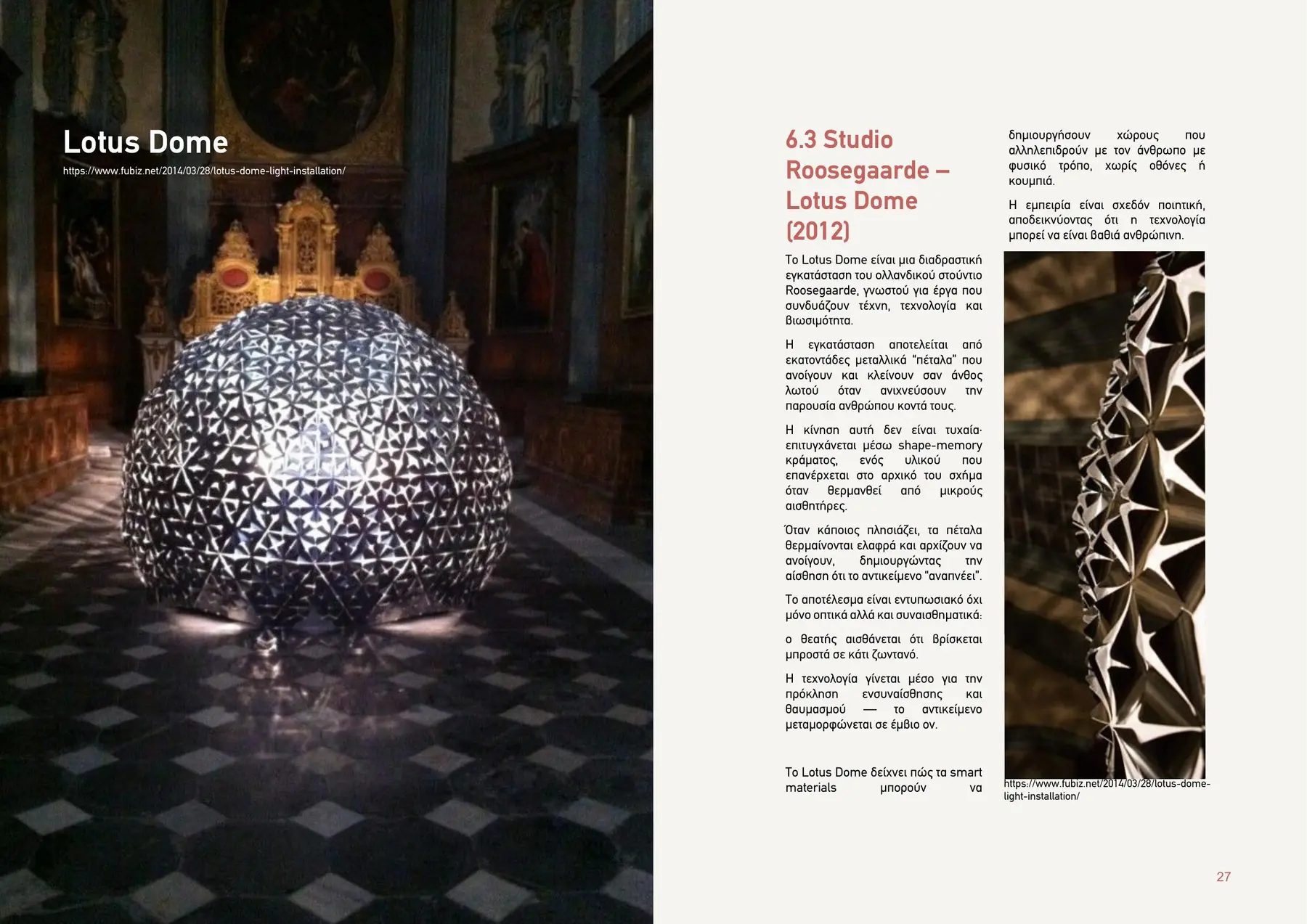
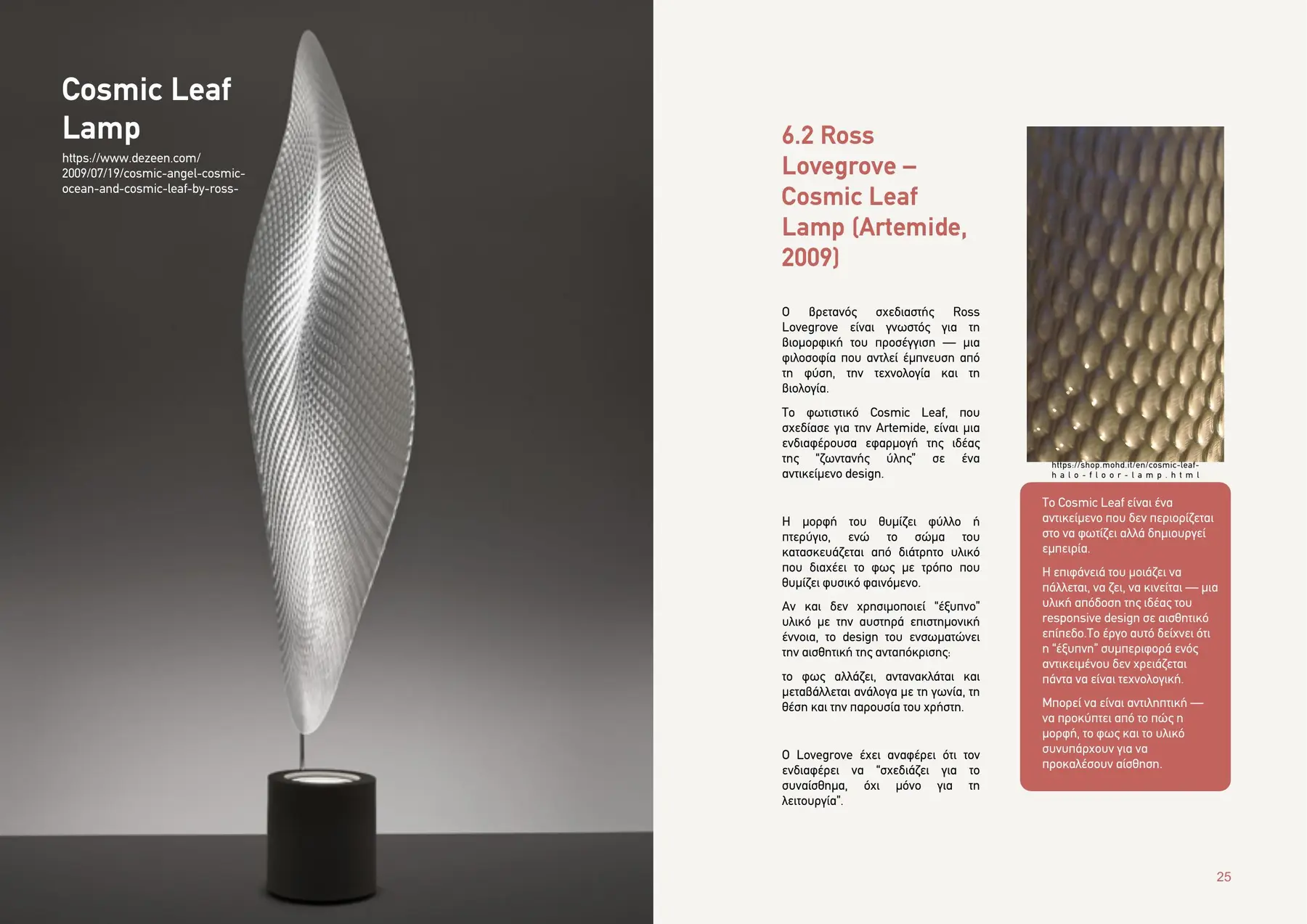
Neri Oxman's Aguahoja treats nature as a collaborator through bio-based structures. Ross Lovegrove's Cosmic Leaf uses form, material and light to create an almost organic presence. Studio Roosegaarde's Lotus Dome responds mechanically to people nearby, making movement part of the encounter.
Across all three, the object is not static. It becomes an event between material, person and place.
04 / Conclusion
Responsiveness only matters when the user can make sense of it.
The research argues that smart materials should not be used as technological spectacle. Their behaviour needs to support usability, communicate clearly and remain appropriate to the environmental context.
For product designers, this means orchestrating a relationship between people, matter and technology. The future of form is not only how an object looks, but how it lives and behaves when someone uses it.
Project details
From thinking to a tangible outcome.
Next case study