02 / Case study / 2026
Transit Companion
Turning an uncertain bus journey into a clearer, calmer and more human service experience.
Overview
This service design project investigated the experience of travelling by public bus and translated research findings into a mobile companion concept. The proposal focuses on real-time route information, clear stop guidance and timely notifications that reduce uncertainty during the journey.
01 / Research
The strongest need was not more features. It was a sense of control.
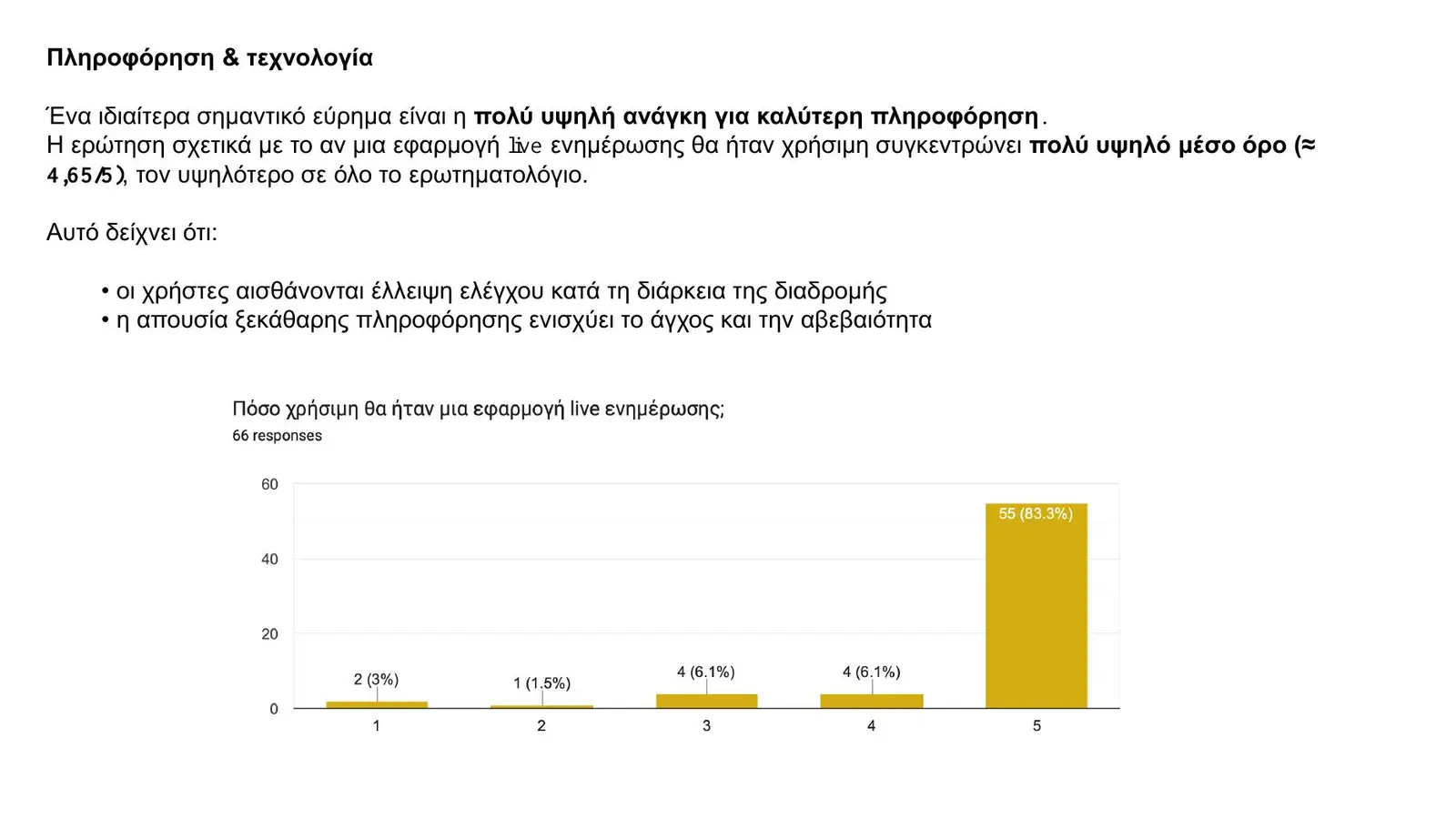
A survey of 66 bus users examined comfort, cleanliness, access to information and emotional experience. Overall comfort and satisfaction remained low to moderate, while live journey information received the highest usefulness rating in the study.
The evidence suggested that unclear stops and arrival information increase cognitive load. For occasional users especially, uncertainty turns a simple journey into a continuous check: Where am I? When should I get off? Am I late?
02 / Synthesis
Three personas made different sources of stress visible.
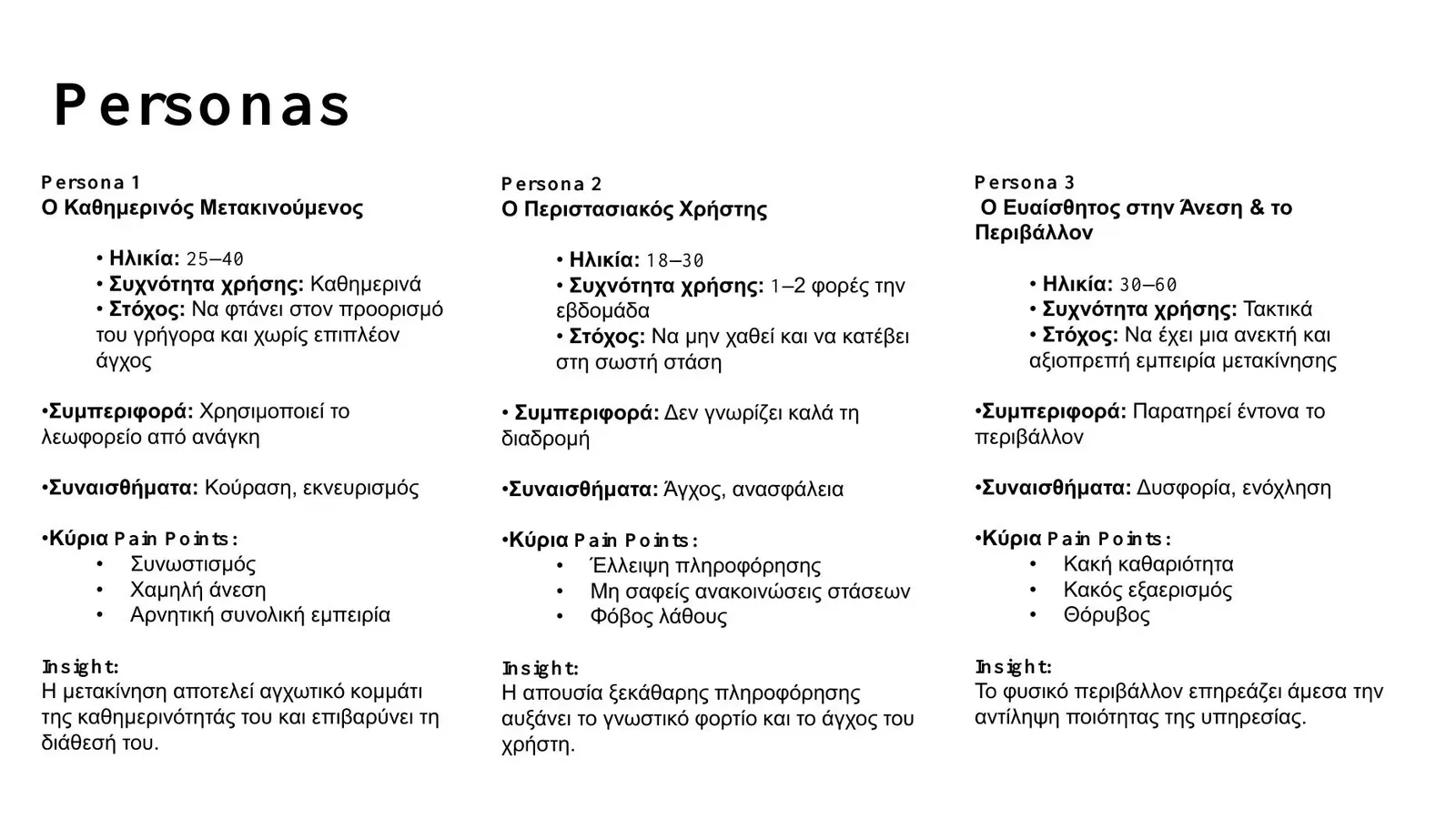
The research was synthesised into three behavioural profiles: the daily commuter, the occasional user and the passenger who is sensitive to comfort and the physical environment.
Together they revealed four recurring pain points: low comfort, inconsistent cleanliness, insufficient information and a negative emotional experience. This helped separate problems the app could address directly from wider operational issues.
03 / Journey map
The critical moment happens before the passenger reaches the stop.
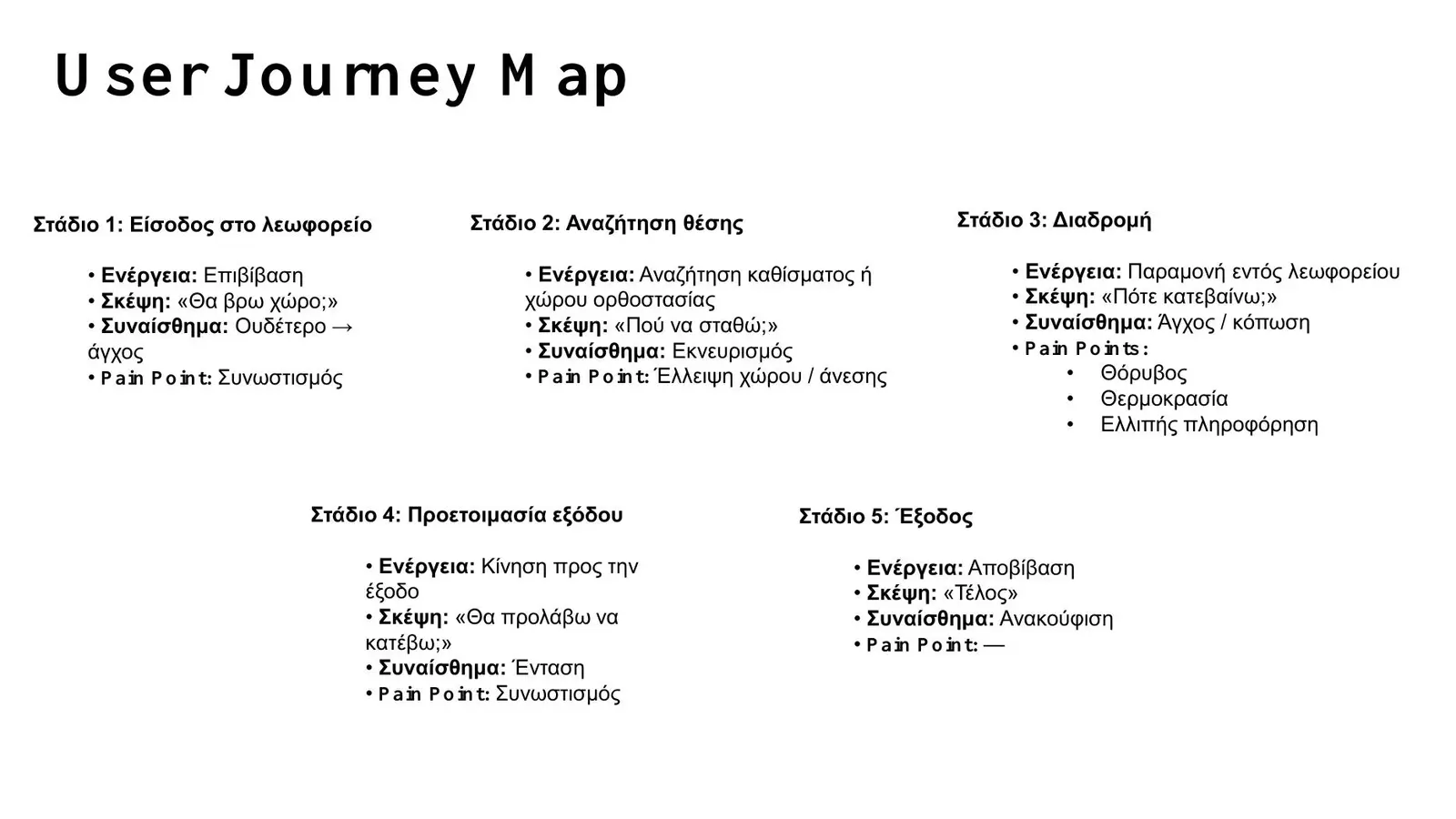
The journey map followed five stages from boarding to exit. Anxiety rises during the ride, peaks while preparing to leave and only drops after the passenger is safely off the bus.
That pattern shaped the concept around proactive information: live progress, upcoming stops and reminders that arrive before the user needs to search for them.
04 / App concept
A mobile companion designed around the next useful decision.
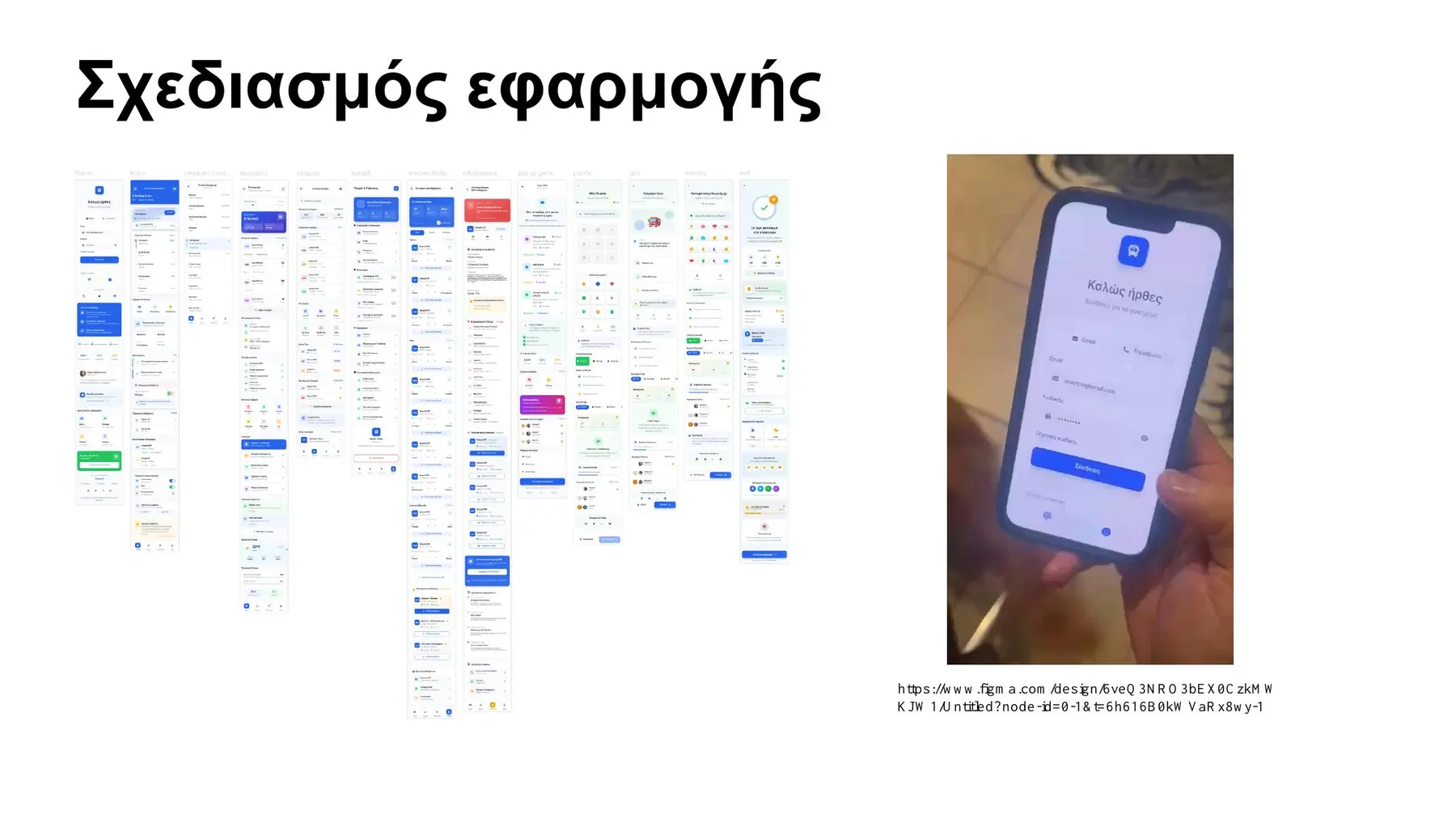
The proposed app brings route, stop and arrival information into a focused mobile flow. It also introduces destination reminders and journey notifications so users can pay less attention to the map and more attention to the trip itself.
The concept was translated into a broad Figma flow and an interactive mobile prototype. A phased implementation plan begins with core information, moves to selected pilot routes and expands through feedback and operational collaboration.
Project details
From thinking to a tangible outcome.
Next case study